evidence-pack-as-at-2026-03-01.pdf
73 KB
8 things about PaveKeep can be demonstrated on a working network rather than described. Each one below names the artefact behind it — a screen of the running product, or a document it produced — and you can open the artefact.
The documents are the real output, not illustrations of it: the three booklets are the files a council would file, and the two evidence packs are the same report generated as at two different dates. Every one is committed to the repository with its SHA-256, so the file you download is the file that was reviewed.
which survey, which setting, which piece of arithmetic. The software explains itself rather than asking to be trusted.
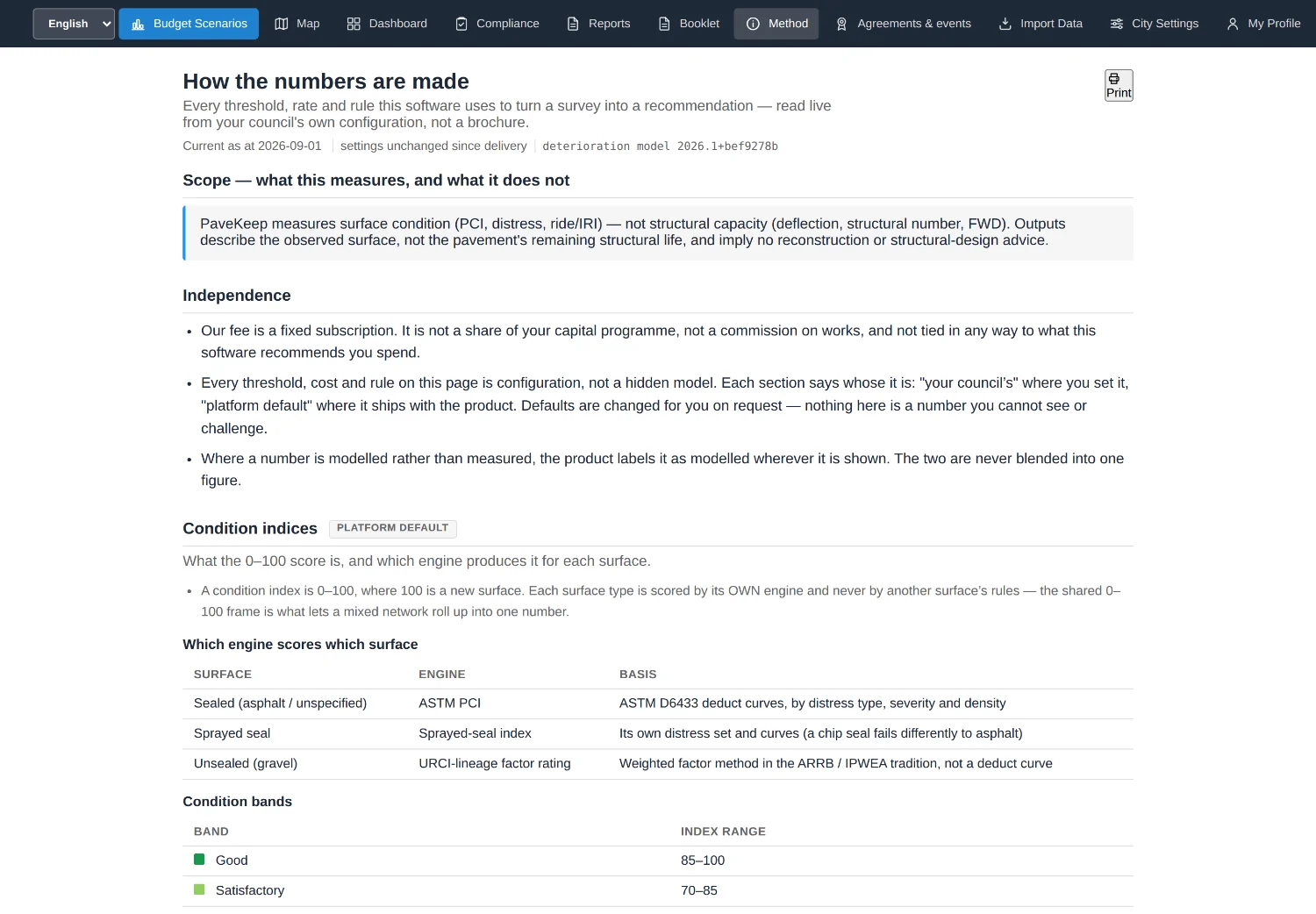
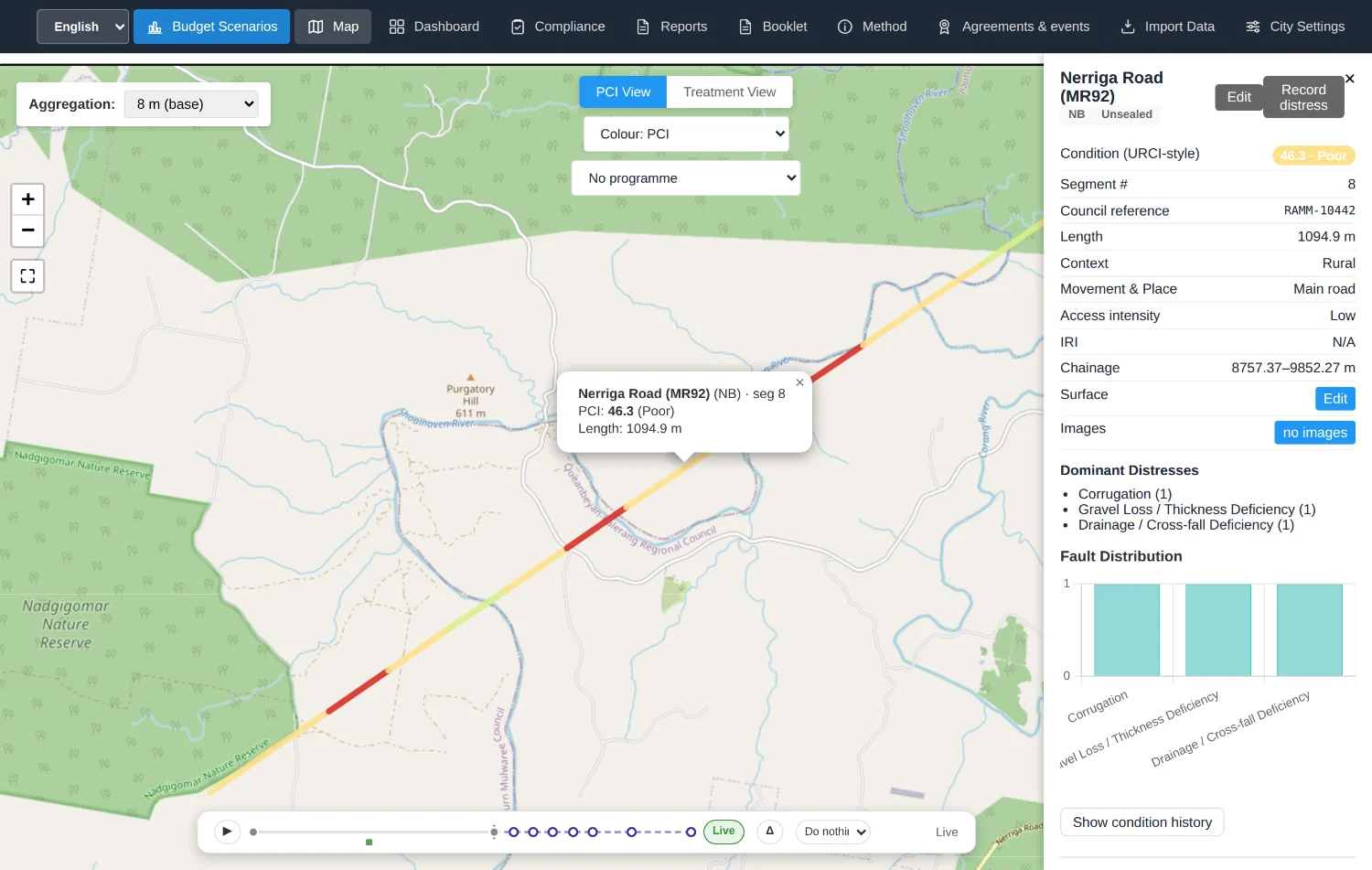
This is the one councils test us on.
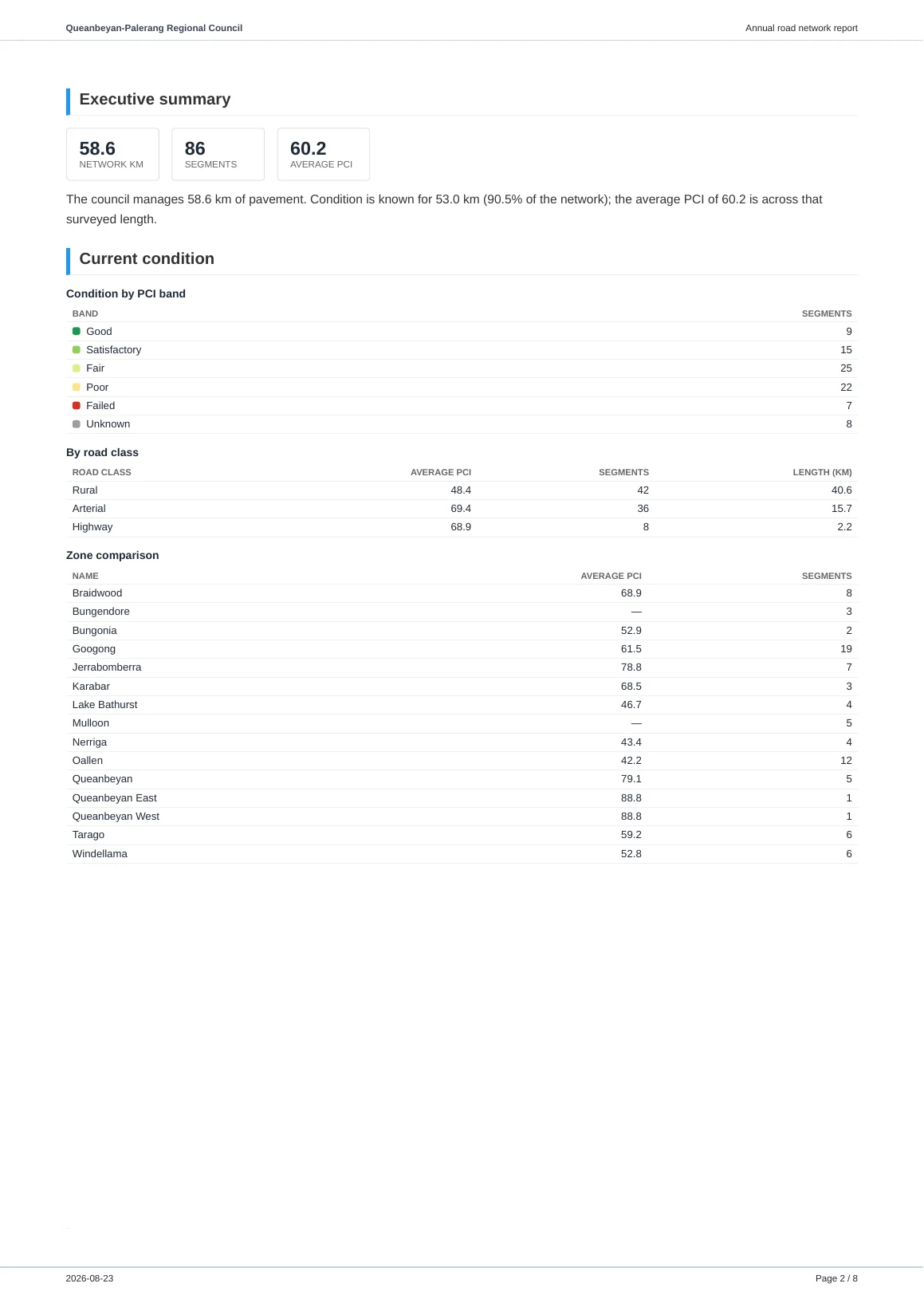
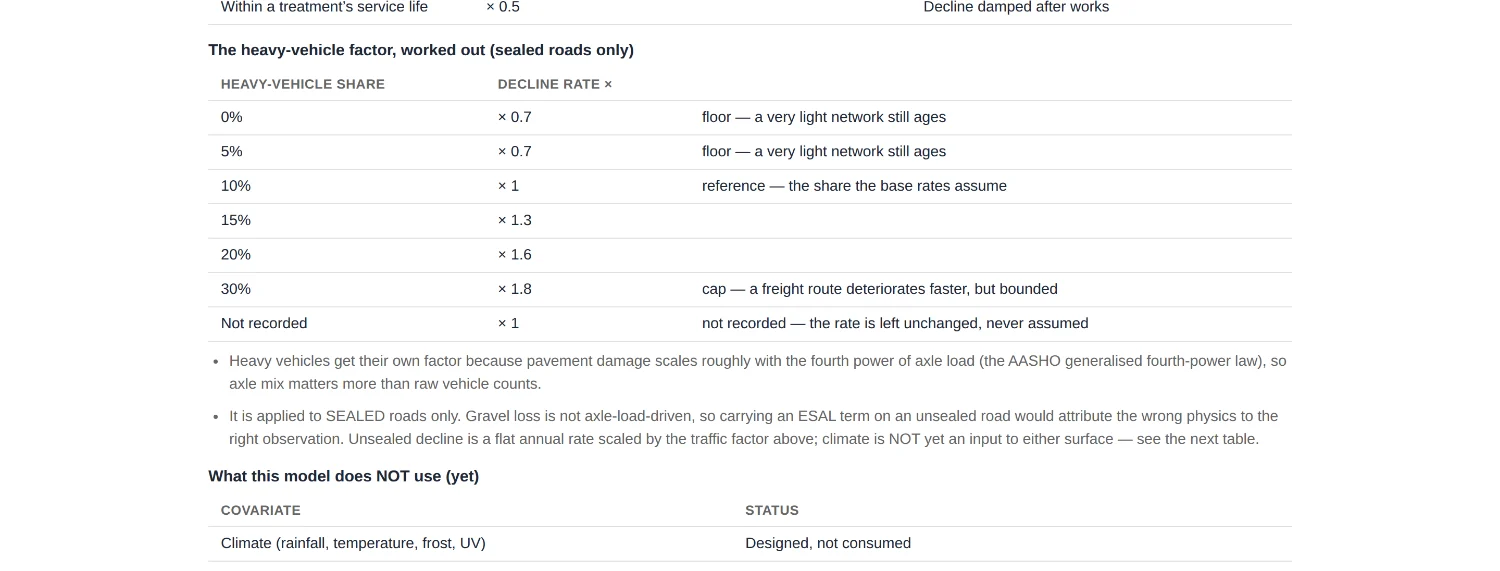
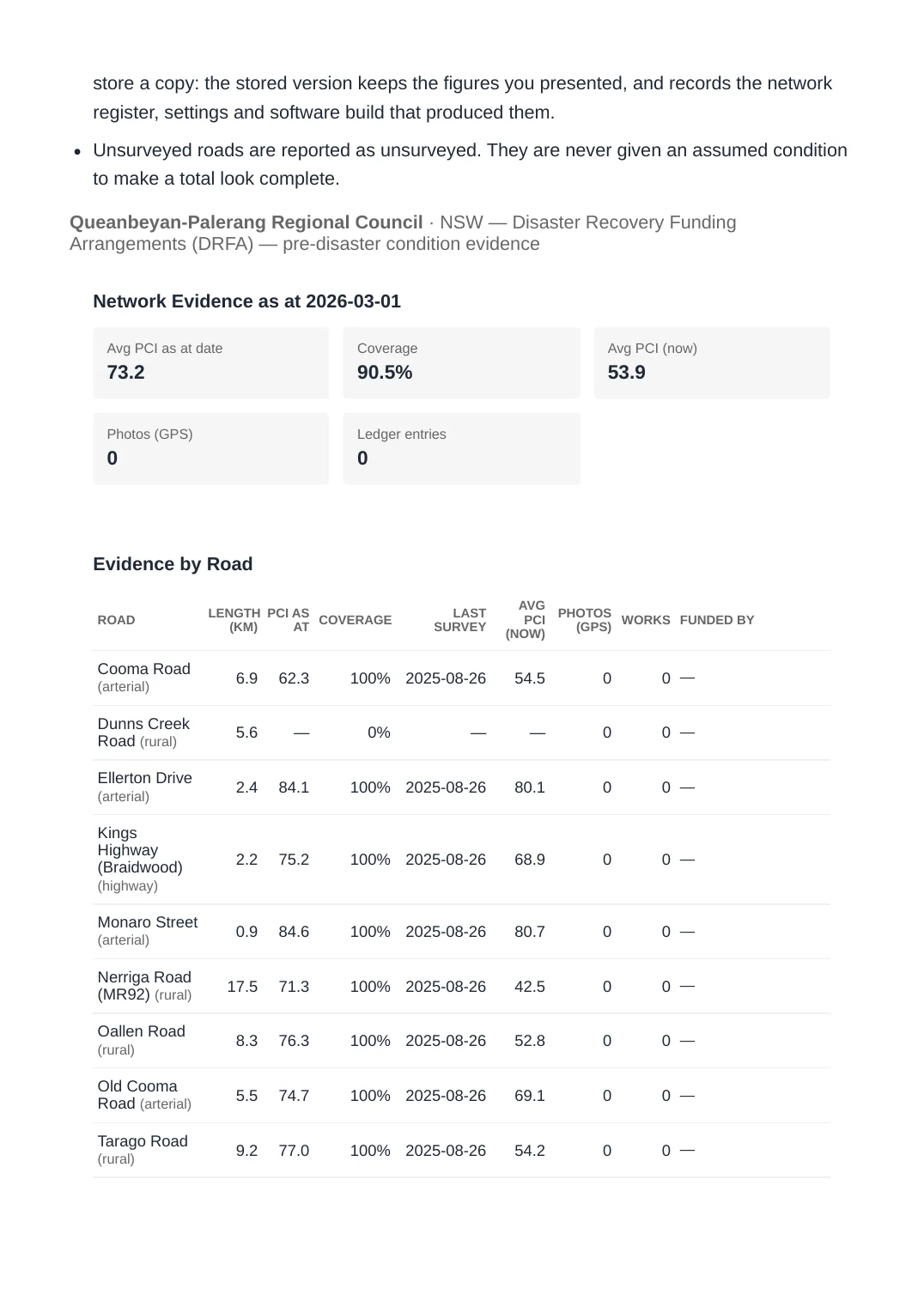
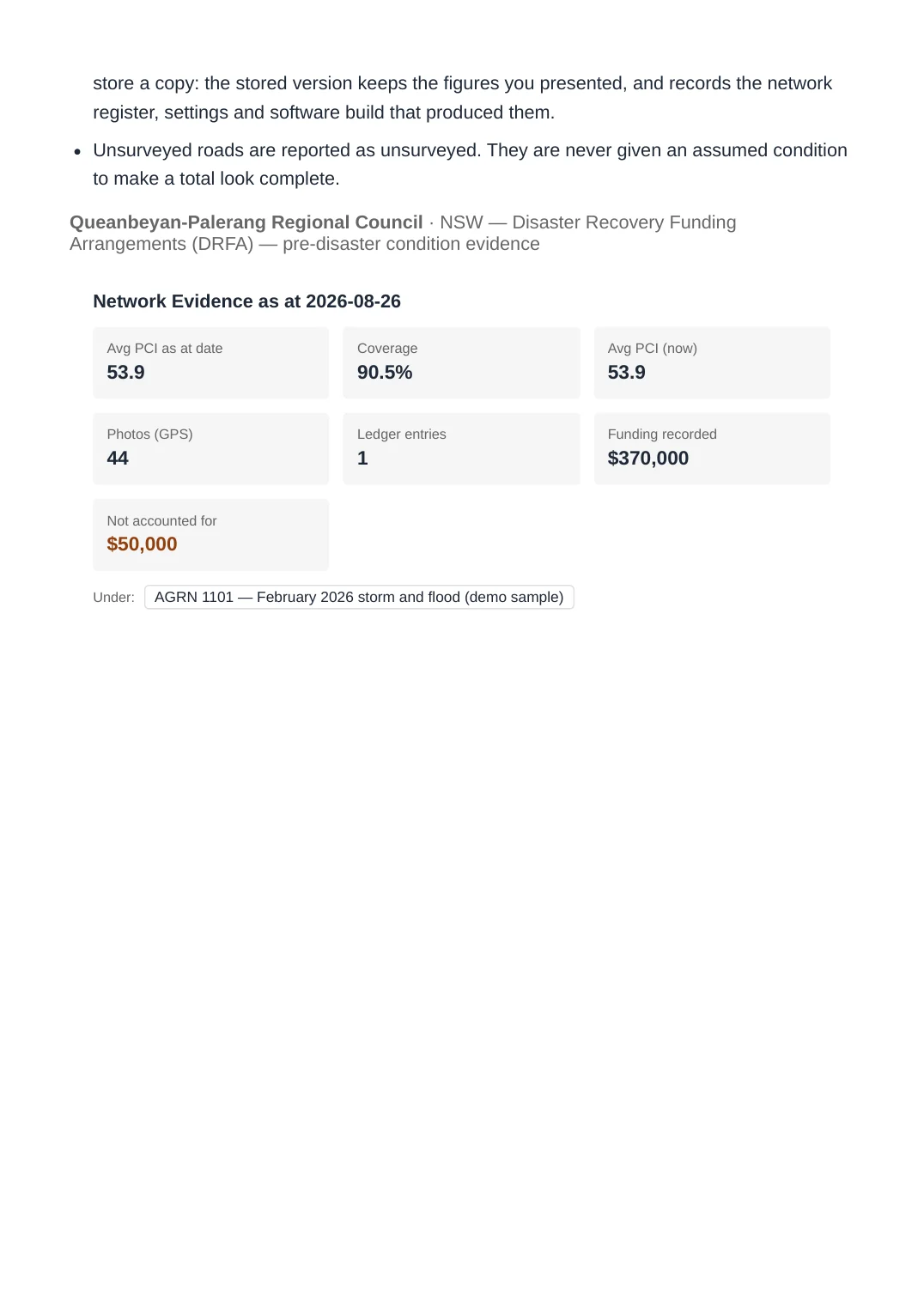
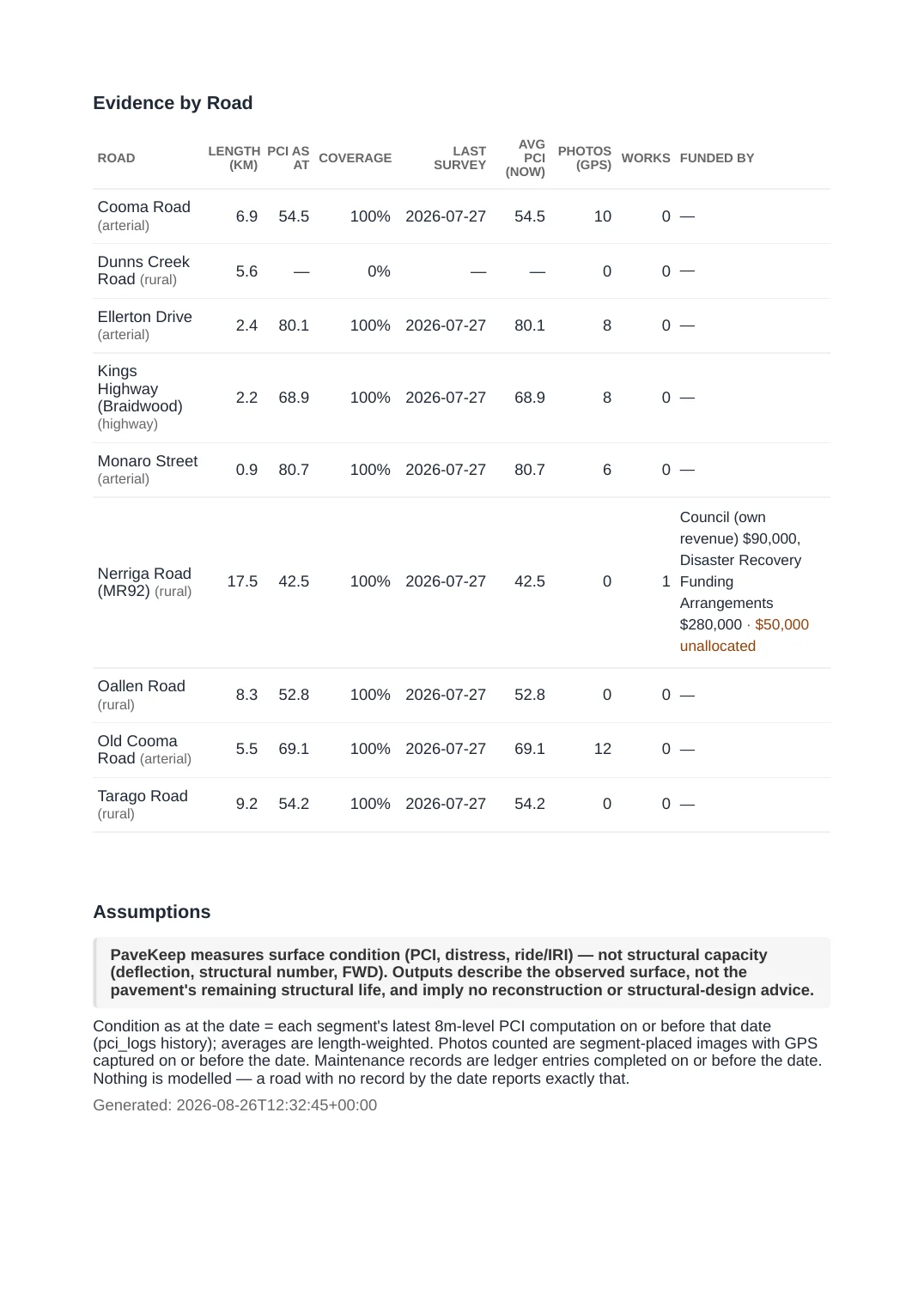
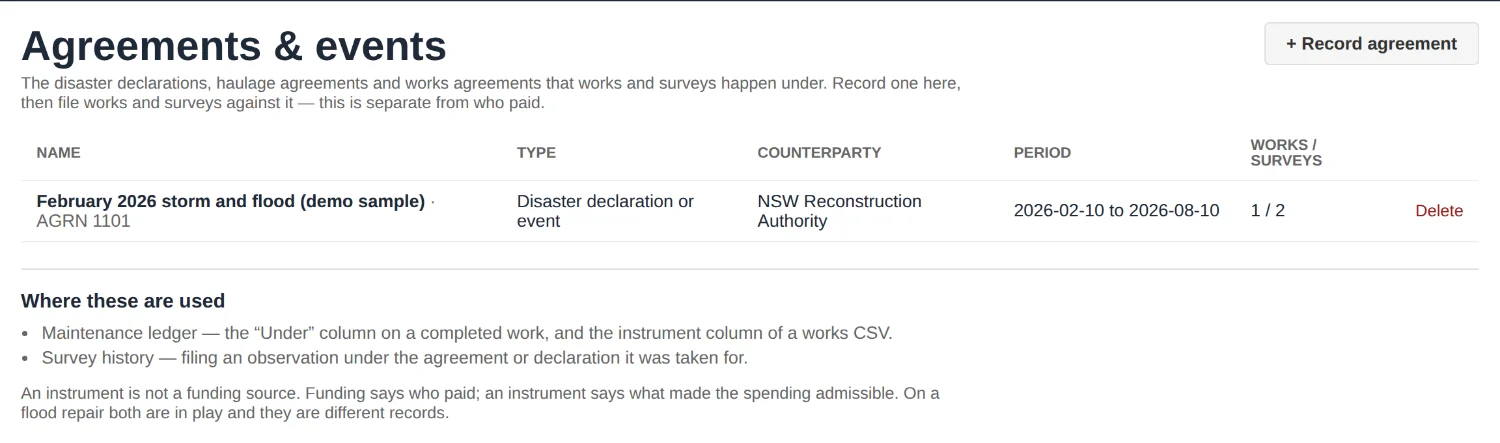
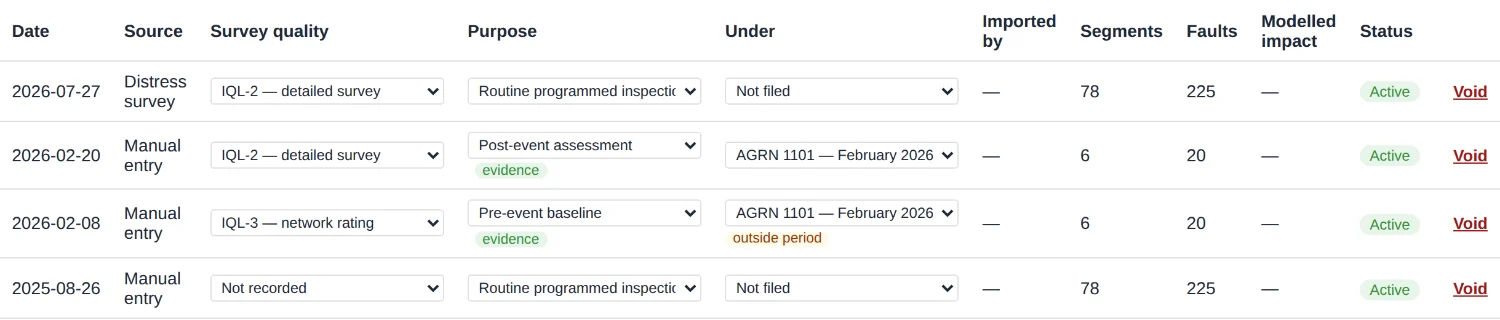

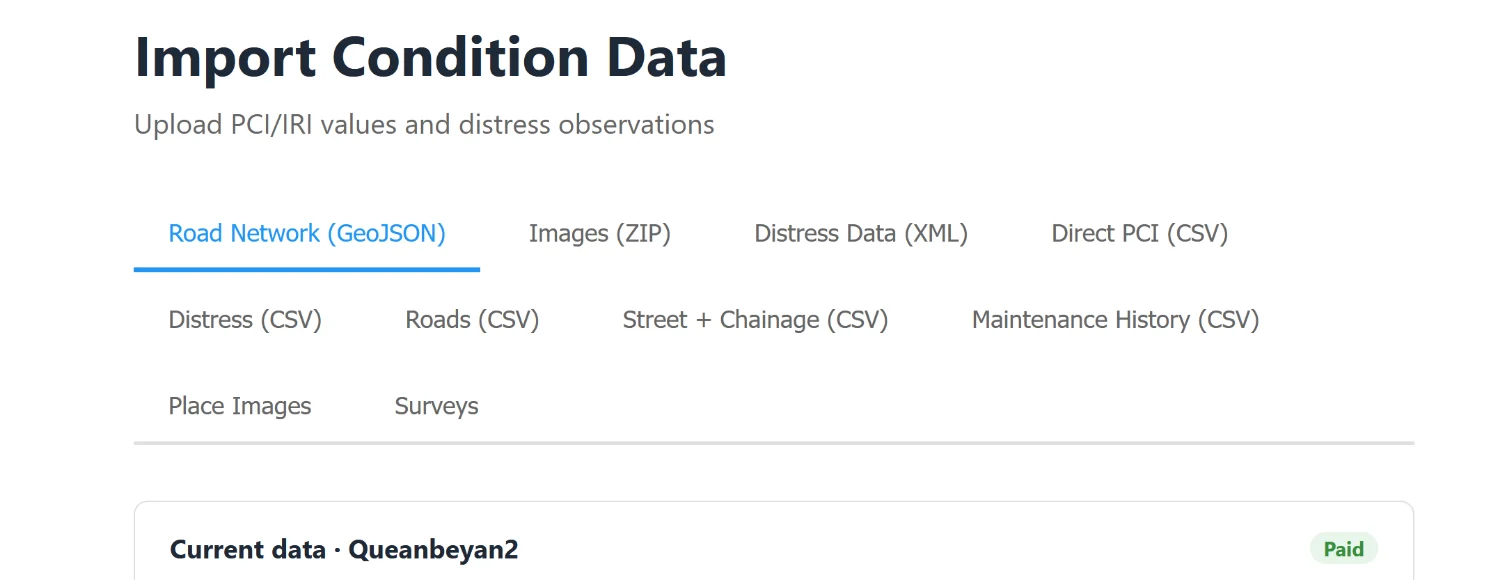
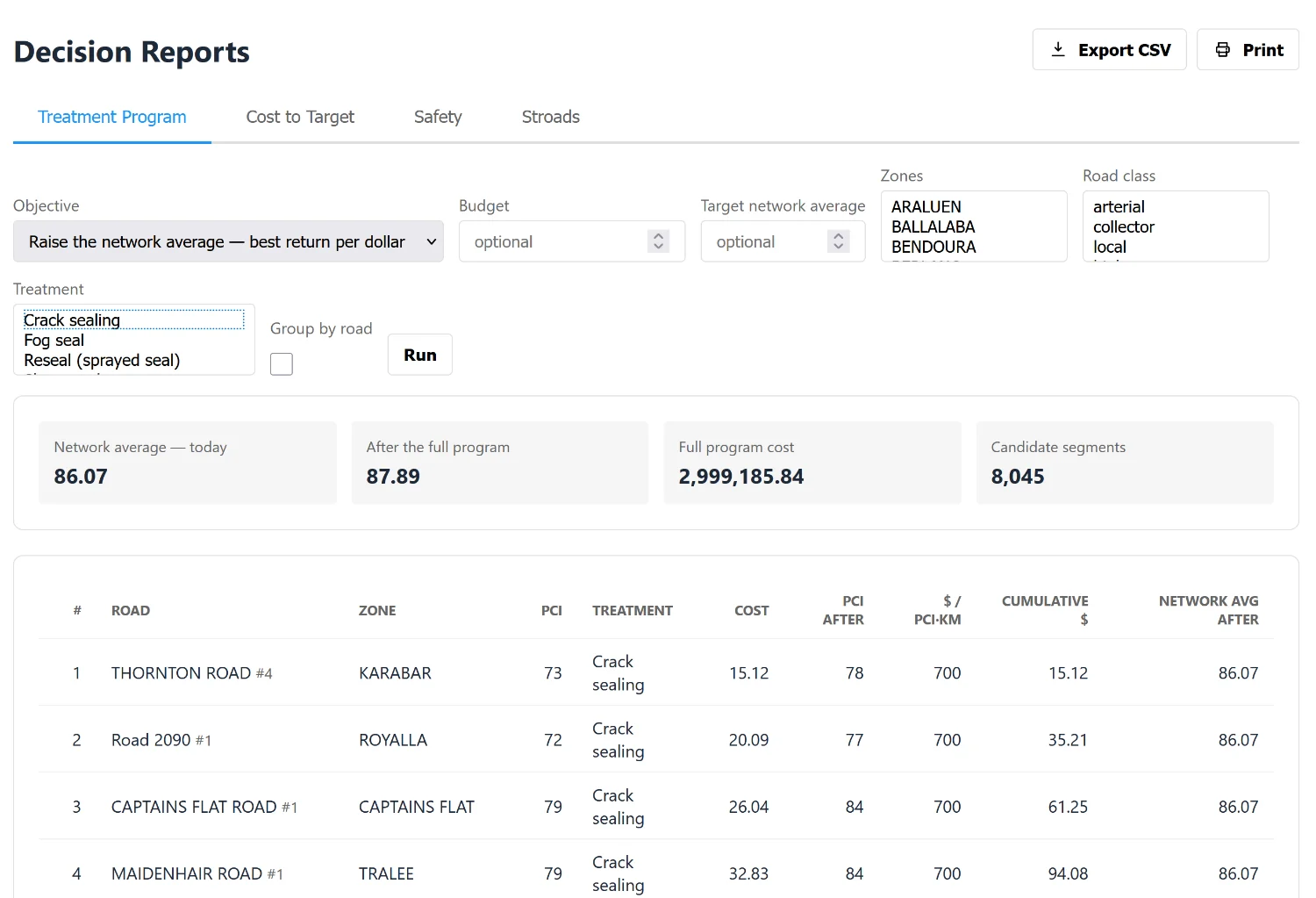
These are files, not pictures of files. Their hashes are published with the pack: see docs/PROOF_EXECUTION_MAP.md and the manifest beside it.
73 KB
87 KB
603 KB
249 KB
616 KB
37 KB
Every artefact above was produced on the demonstration network. No council has put its own data through PaveKeep in service, so there is nothing here that a council said about us — only things the software did, which you can open.